Login
Login

 1800 233 5333

Owning a home can feel financially out of reach, but PMAY-U 2.0 can make the journey more
affordable for eligible urban families. The scheme provides support through four different
housing options, including an interest subsidy on eligible home loans. But understanding
who qualifies, what benefits are available and how the scheme works with home finance is
essential before applying.
Introduced for the period 2024–2029, PMAY-U 2.0 aims to support eligible urban families in
constructing, purchasing or accessing affordable housing. The scheme covers Economically
Weaker Sections (EWS), Lower Income Groups (LIG) and Middle Income Groups (MIG),
subject to the applicable conditions.
For a prospective homebuyer, however, PMAY 2.0 is more than just a government housing
scheme. It can be one part of a larger homeownership plan—one that also involves
understanding your eligibility, choosing the right housing option and planning your home
finance carefully.
This guide breaks down PMAY 2.0 eligibility, benefits, the difference between the earlier
PMAY and PMAY 2.0, application process, common myths and reasons applications may be
rejected, so you can approach your homeownership journey with greater clarity.
Key Takeaways
- PMAY-U 2.0 runs for five years from 1 September 2024 to support eligible urban families with affordable housing.
- It covers EWS (up to ₹3 lakh), LIG (₹3–6 lakh) and MIG (₹6–9 lakh) annual household income categories.
- There are four components: BLC, AHP, ARH and the Interest Subsidy Scheme (ISS) on eligible home loans.
- Your family must not own a pucca house in India or have received a government housing benefit in the last 20 years.
- Applying does not guarantee the benefit; eligibility is verified under the applicable PMAY-U 2.0 guidelines.
PMAY 2.0 at a Glance
If you are considering buying, building or accessing an affordable home in an urban area, PMAY-U 2.0 is worth understanding before you begin your homeownership journey. The scheme was launched in September 2024 and is being implemented for five years to support eligible urban families through different housing options.
PMAY 2.0 in 30 Seconds
What is PMAY 2.0? — A government housing scheme aimed at supporting eligible urban
families with affordable housing.
How long does it run? — The mission is being implemented for five years from 1 September
2024.
Who can benefit? — Eligible urban families, including households in the EWS, LIG and MIG
categories, subject to scheme conditions.
What does it support? — Construction, purchase or rental of affordable housing through
different scheme components.
What are the four components? — BLC, AHP, ARH and ISS.
Does it include home-loan support? — Yes. The Interest Subsidy Scheme (ISS) provides
interest-subsidy support on eligible housing loans, subject to the applicable conditions.
The Four PMAY 2.0 Components
1. Beneficiary Led Construction (BLC): Support for eligible beneficiaries to construct a new
house on their own available land.
2. Affordable Housing in Partnership (AHP): Affordable homes developed through
partnerships involving public or private agencies.
3. Affordable Rental Housing (ARH): Affordable rental housing aimed at eligible
beneficiaries, including groups such as urban migrants and other economically vulnerable
sections.
4. Interest Subsidy Scheme (ISS): Interest-subsidy support for eligible households taking
qualifying home loans for purchase, construction or acquisition of a house, subject to the
scheme's conditions.
The key takeaway
PMAY 2.0 is not simply a subsidy scheme. It offers different pathways depending on a
family's housing needs and circumstances. For a homebuyer planning to use housing
finance, understanding the ISS eligibility and loan conditions is particularly important
before making a borrowing decision.
From PMAY to PMAY 2.0: What Has Changed?
PMAY 2.0 is not simply the old PMAY scheme with a new name. The government introduced PMAY-U 2.0 in September 2024 with an updated framework designed to support 1 crore additional urban families over five years. While the earlier PMAY-U had four different verticals, PMAY-U 2.0 has introduced a revised set of four components and updated the way housing assistance is provided.
PMAY vs PMAY 2.0: At a Glance
| Feature | Earlier PMAY-U | PMAY-U 2.0 |
|---|---|---|
| Main objective | Promote affordable housing and support eligible urban households | Expand affordable housing support to additional eligible urban families |
| Mission period | Originally launched in 2015, with extensions for completion of sanctioned houses | Implemented for five years from 1 September 2024 |
| Key housing options | BLC, AHP, ISSR and CLSS | BLC, AHP, ARH and ISS |
| Interest-linked support | Credit Linked Subsidy Scheme (CLSS) | Interest Subsidy Scheme (ISS) |
| Rental housing | Not a separate PMAY-U vertical | Affordable Rental Housing (ARH) is a dedicated vertical |
| Target groups | EWS, LIG and MIG, depending on the component | Eligible EWS, LIG and MIG households, subject to applicable conditions |
| Overall approach | Multiple routes to affordable housing | Updated housing support with options for construction, purchase, rental and eligible home-loan subsidy |
The comparison above is a high-level overview. Eligibility, assistance and loan-related conditions depend on the specific PMAY-U 2.0 component.
So, What Really Changed?
The most noticeable change is the way PMAY-U 2.0 addresses different housing needs.
The earlier PMAY-U included In-Situ Slum Redevelopment (ISSR) and Credit Linked Subsidy
Scheme (CLSS). Under PMAY-U 2.0, these have been replaced in the four-vertical structure
by Affordable Rental Housing (ARH) and the Interest Subsidy Scheme (ISS).
For a prospective homebuyer, the shift from CLSS to ISS is particularly important. The
current ISS provides interest-subsidy support on qualifying home loans, subject to the
scheme's eligibility and loan/property conditions.
In simple terms, PMAY 2.0 gives eligible families different routes depending on their
housing situation—whether they need to construct a home, purchase an affordable home,
access rental housing or seek eligible interest-subsidy support on a home loan.
That makes understanding the eligibility criteria the next important step before assuming
that a PMAY 2.0 benefit will apply to you.
Who Is Eligible for PMAY 2.0?
Before applying for PMAY 2.0, the first question to ask is simple: Do you meet the basic eligibility conditions? The scheme is meant for eligible families living in urban areas who meet the prescribed income and housing criteria. Meeting the basic conditions, however, does not automatically guarantee the benefit; eligibility is subject to verification under the applicable PMAY-U 2.0 guidelines.
Income Categories Under PMAY 2.0
• EWS – Economically Weaker Section: Up to ₹3 lakh annual household income.
• LIG – Lower Income Group: Above ₹3 lakh and up to ₹6 lakh annual household income.
• MIG – Middle Income Group: Above ₹6 lakh and up to ₹9 lakh annual household income.
The exact benefit available depends on the PMAY-U 2.0 component for which the
beneficiary qualifies. For example, the Interest Subsidy Scheme (ISS) is available to eligible
EWS, LIG and MIG households, subject to its specific conditions.
Other Important Eligibility Conditions
• The beneficiary family must be living in an urban area covered by PMAY-U 2.0.
• The family must not own a pucca house anywhere in India, either in the applicant's name
or in the name of any member of the beneficiary family.
• A beneficiary who has already received a house under a housing scheme of the Central
Government, State/UT Government or Local Self Government during the previous 20 years
is not eligible for PMAY-U 2.0.
• The beneficiary family is generally defined as husband, wife and unmarried children.
• Additional conditions may apply depending on the specific PMAY-U 2.0 component
selected.
Who Gets Preference?
PMAY-U 2.0 also provides preference to several vulnerable and disadvantaged groups,
including widows, single women, persons with disabilities, senior citizens, transgender
persons, members of Scheduled Castes and Scheduled Tribes, minorities and other
vulnerable sections. Special focus is also given to groups such as street vendors,
construction workers, artisans and residents of slums and chawls.
Before You Apply: Check These Four Things
1. Check your annual household income. Know which income category you fall under.
2. Check your homeownership status. Make sure neither you nor a member of your
beneficiary family owns a pucca house anywhere in India.
3. Check previous housing benefits. If your family has received benefits under a government
housing scheme in the last 20 years, check whether this affects your eligibility.
4. Check the applicable PMAY-U 2.0 component. Eligibility and benefits can differ depending
on whether you are looking at BLC, AHP, ARH or ISS.
Important
Simply submitting a PMAY-U 2.0 application does not guarantee that you will receive the
benefit. Your eligibility has to be verified by the relevant authorities and agencies under the
scheme.
For a prospective homebuyer, this eligibility check is an important first step. Once you know
that you meet the basic requirements, the next question naturally becomes: what financial
support can PMAY 2.0 actually provide?
PMAY 2.0 Benefits: What Can It Mean for Your Home Purchase?
For an eligible family, PMAY-U 2.0 can provide financial support through different housing
options. The benefit you receive depends on the PMAY-U 2.0 vertical applicable to your
situation.
For homebuyers using housing finance, the Interest Subsidy Scheme (ISS) is particularly
important. Under the current scheme, eligible EWS, LIG and MIG households can receive
interest subsidy on qualifying home loans sanctioned and disbursed on or after 1
September 2024.
How Much Interest Subsidy Can You Get?
Under ISS, households with annual income of up to ₹9 lakh may qualify, subject to the other
scheme conditions. The current parameters include:
| Particular | PMAY-U 2.0 ISS |
|---|---|
| Annual household income | Up to ₹9 lakh |
| Maximum loan value | ₹25 lakh |
| Maximum property value | ₹35 lakh |
| Subsidy rate | 4% on the first ₹8 lakh |
| Maximum loan tenure considered | Up to 12 years |
| Maximum released interest subsidy | ₹1.80 lakh |
| Maximum carpet area | 120 sq. m. |
The subsidy is subject to the scheme's eligibility and other conditions. It should therefore not be understood as a guaranteed cash payment simply because someone takes a home loan.
What Does This Mean for a Homebuyer?
Think of PMAY 2.0 as one part of your overall home-finance plan.
For example, if an eligible homebuyer is purchasing a qualifying property with a qualifying
home loan, the ISS benefit may reduce the overall interest burden as per the scheme's
prescribed calculation.
However, the subsidy does not eliminate the need to plan for the down payment, EMI,
interest rate, loan tenure and overall repayment obligation.
That's why checking PMAY 2.0 eligibility should go hand in hand with understanding how
much you can comfortably borrow.
Important
The actual benefit depends on the borrower's eligibility, loan, property and other conditions
prescribed under PMAY-U 2.0. Always verify the latest official guidelines before making a
financial decision.
Understanding the Four PMAY 2.0 Components
PMAY-U 2.0 is designed to address different housing needs rather than offering one single type of assistance. The scheme operates through four verticals: Beneficiary Led Construction (BLC), Affordable Housing in Partnership (AHP), Affordable Rental Housing (ARH) and Interest Subsidy Scheme (ISS).
| Component | What it means | What it supports |
|---|---|---|
| BLC | Beneficiary Led Construction | Eligible EWS families constructing a new pucca house on their own available land |
| AHP | Affordable Housing in Partnership | Affordable pucca homes developed through eligible public/private agencies |
| ARH | Affordable Rental Housing | Affordable rental housing for eligible EWS/LIG beneficiaries and specified groups |
| ISS | Interest Subsidy Scheme | Interest subsidy on qualifying home loans for eligible EWS/LIG/MIG households |
BLC: Beneficiary Led Construction
BLC supports eligible EWS families who have their own available land and want to construct
a new pucca house. Under the current scheme, the house can have a carpet area of between
30 and 45 sq. m., subject to the applicable conditions.
AHP: Affordable Housing in Partnership
AHP supports eligible EWS beneficiaries in owning a pucca house. Affordable houses are
constructed by eligible public or private agencies and made available to eligible
beneficiaries.
ARH: Affordable Rental Housing
ARH focuses on affordable rental housing rather than home ownership. It is intended for
eligible EWS/LIG beneficiaries and groups such as urban migrants, industrial workers,
working women, construction workers and other urban poor groups.
ISS: Interest Subsidy Scheme
ISS is the component most directly relevant to eligible homebuyers using housing finance. It
provides interest subsidy on qualifying home loans for purchase, repurchase or
construction of houses, subject to the prescribed conditions.
The key takeaway is simple: the four components serve different housing needs.
Understanding which one applies to you is an important step before you apply.
PMAY 2.0 and Home Loans: How Do They Work Together?
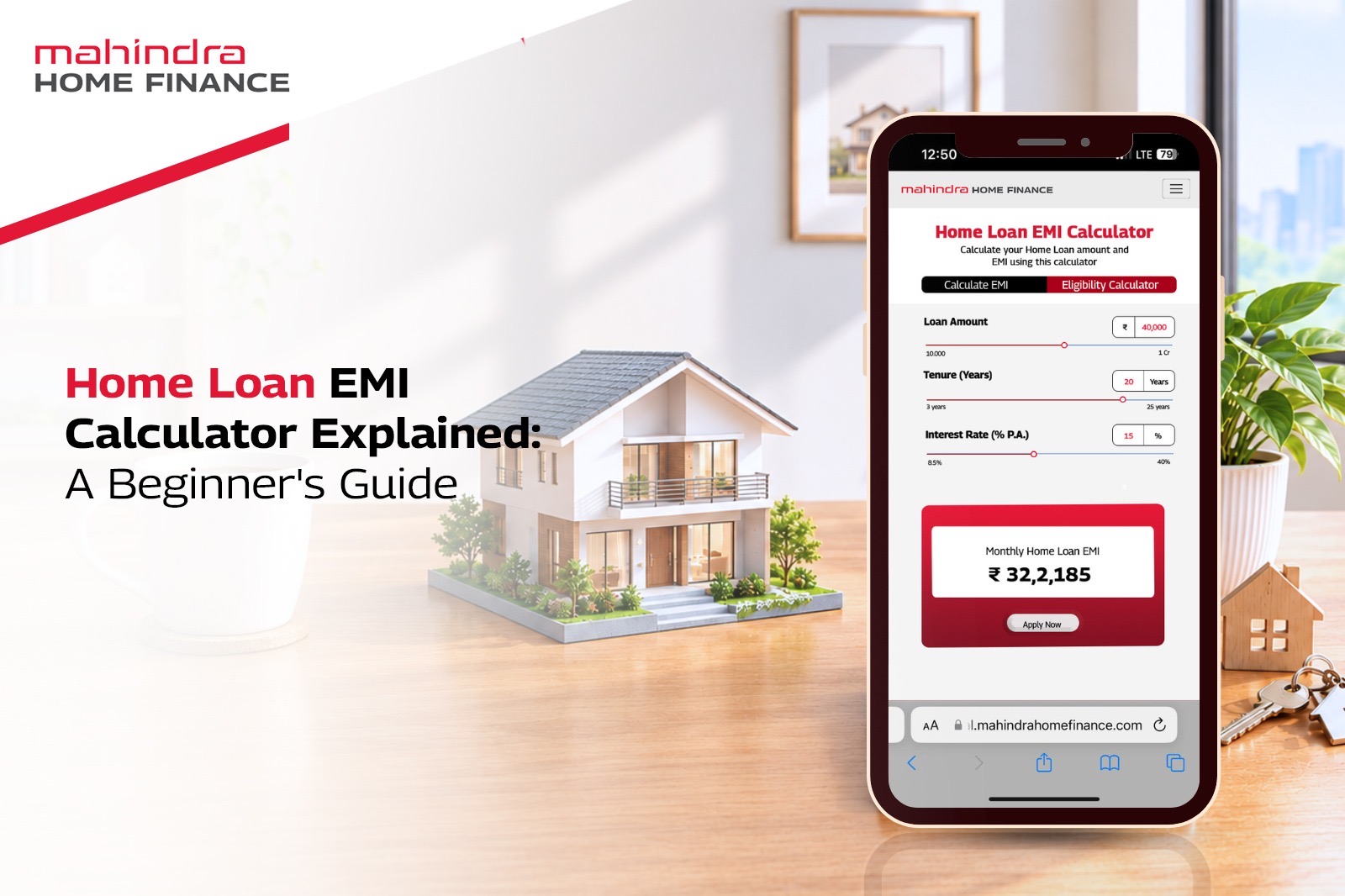
PMAY 2.0 and a home loan serve different purposes.
PMAY-U 2.0 is a government housing-support scheme, while a home loan is a financing
arrangement that helps you fund the purchase or construction of a home. For eligible
borrowers, the Interest Subsidy Scheme can connect these two parts of the homeownership
journey.
Why Does This Matter?
Being eligible for PMAY 2.0 does not automatically mean that you can afford any property
or any loan amount.
Before choosing a home, a prospective buyer should consider:
• Property price
• Down payment requirement
• Loan amount
• Monthly EMI
• Interest rate
• Loan tenure
• Overall repayment capacity
• Whether the proposed loan and property meet PMAY-U 2.0 conditions
For example, an eligible buyer may qualify for the ISS benefit but still need to choose a loan
amount and EMI that fit comfortably within the household's monthly budget.
This is why government assistance and responsible home-finance planning should go
together.
The right housing-finance partner can help a prospective homeowner understand the
financing journey, assess the requirement and make an informed borrowing decision.
Common PMAY 2.0 Myths — Busted
PMAY 2.0 involves several eligibility conditions and housing options, which can sometimes lead to confusion. Here are some common misconceptions worth clearing up.
Myth 1: PMAY 2.0 means the government pays for the entire house.
Fact: PMAY-U 2.0 provides assistance through specific components and subject to
prescribed conditions. It does not mean that the government pays the entire cost of every
home.
Myth 2: Taking a home loan automatically makes me eligible for the PMAY 2.0 subsidy.
Fact: A home loan by itself does not guarantee the ISS benefit. The borrower, loan and
property must meet the applicable PMAY-U 2.0 conditions.
Myth 3: Everyone who applies will receive the benefit.
Fact: Submitting an application does not itself guarantee a benefit. Eligibility has to be
verified by the relevant authorities and agencies.
Myth 4: PMAY 2.0 is only for people buying a house.
Fact: PMAY-U 2.0 covers different housing needs through BLC, AHP, ARH and ISS, including
construction, affordable housing, rental housing and eligible home-loan interest subsidy.
Myth 5: PMAY 2.0 and a home loan are the same thing.
Fact: They are different. PMAY-U 2.0 is a government housing-support programme, while a
home loan is a financing facility used to fund a home purchase or construction.
Top Reasons PMAY 2.0 Applications May Be Rejected
Applying for PMAY 2.0 is not the same as being approved for its benefits. The official PMAY- U 2.0 application process makes it clear that benefits are subject to eligibility verification. Some common reasons an application may not qualify include:
1. Not Meeting the Income Criteria
Different PMAY-U 2.0 components have different income requirements. For example, BLC is
meant for eligible EWS households, while ISS covers eligible EWS, LIG and MIG households
within the prescribed income limits.
2. Owning a Pucca House
A beneficiary family generally must not own a pucca house anywhere in India, either in the
applicant's name or in the name of a family member.
3. Receiving Previous Housing Benefits
The PMAY-U 2.0 eligibility check asks whether the applicant has already received a benefit
under a Central or State Government housing scheme during the previous 20 years. This can
affect eligibility.
4. Incorrect or Incomplete Information
Differences or errors in income, family, address or other application information can create
verification issues.
5. Failing the Required Verification
PMAY-U 2.0 applications can require Aadhaar authentication and other verification steps.
An application is not considered eligible simply because the form has been submitted.
6. Not Meeting Component-Specific Conditions
Even if a household meets the broad eligibility requirements, the proposed house, property
or loan may not satisfy the conditions of the selected PMAY-U 2.0 component.
How Can You Reduce the Risk of Rejection?
Before applying:
1. Check which PMAY-U 2.0 component applies to you.
2. Verify your household income.
3. Check your family's homeownership status.
4. Review any previous government housing benefits.
5. Keep your application information accurate and consistent.
6. For ISS, check the applicable loan and property conditions before proceeding.
A few minutes spent checking eligibility can help avoid unnecessary delays later.
How to Apply for PMAY 2.0
Once you understand your eligibility and the relevant PMAY-U 2.0 component, the next step
is to apply through the prescribed process.
The official PMAY-U 2.0 portal provides the application route and eligibility checks.
Applicants are required to review the scheme instructions, select a component, complete
the eligibility check and provide the required information and authentication.
A Simple Application Journey
Step 1: Check your eligibility
Review your income, homeownership status and previous housing benefits.
Step 2: Select the relevant PMAY-U 2.0 component
Choose the component that matches your housing requirement. The official application
instructions state that once a vertical is selected, it cannot be changed at a later stage.
Step 3: Complete the eligibility check
Enter the requested household and income information and complete the eligibility
assessment.
Step 4: Complete authentication and provide details
Depending on the process, you may need to complete Aadhaar authentication and provide
personal, family, income and address information.
Step 5: Review and submit
Check the information carefully before submitting your application.
Step 6: Save your application details
Keep your application receipt or reference information so that you can use it for future
tracking or communication.
Tip
Do not rush through the application. Incorrect information can create verification problems
later.
The application process and documentation can differ by component, so applicants should
always refer to the latest official instructions for their specific PMAY-U 2.0 route.
Choosing the Right Home-Finance Partner
Understanding PMAY 2.0 is only one part of the homeownership journey. If you plan to
finance your home, the next step is understanding how much you need to borrow and what
repayment structure works for you.
A good home-finance decision should look beyond the maximum loan amount you may be
eligible for. It should consider your income, existing financial commitments, down payment,
preferred property and long-term repayment comfort.
What Should You Look For?
• Suitable financing: A loan structure that matches your homeownership requirement.
• Repayment comfort: An EMI that fits realistically within your monthly budget.
• Transparency: Clear information about applicable loan terms, charges and obligations.
• Guidance: Support through the documentation and application journey.
• Understanding of your needs: A housing-finance partner that takes your circumstances
into account.
For an eligible PMAY 2.0 homebuyer, the goal is not simply to secure a subsidy or a loan. It
is to put together a homeownership plan that is financially manageable over the long term.
This is where choosing the right home-finance partner can make the journey simpler.
Take the Next Step Towards Homeownership With Mahindra Home Finance
PMAY 2.0 can be an important step towards making homeownership more accessible for
eligible families. But turning that opportunity into a home also requires careful financial
planning.
That's where Mahindra Home Finance can be part of your homeownership journey.
From understanding your home-finance requirement to exploring suitable financing
options, having the right support can make the process easier to navigate.
Whether you are beginning to explore your first home or already considering your financing
options, start by understanding your eligibility, assessing what you can comfortably afford
and choosing a financing partner that fits your needs.
Ready to Take the Next Step?
Explore your home-finance options with Mahindra Home Finance and move closer to your
homeownership goals with greater clarity and confidence.
FREQUENTLY ASKED QUESTIONS (FAQs)
PMAY-U 2.0 is the Government of India's housing mission for urban areas. It is being implemented for five years from 1 September 2024 and provides support through four verticals: BLC, AHP, ARH and ISS.
Broadly, eligible EWS, LIG and MIG families living in urban areas can benefit, subject to the conditions of the relevant component. A beneficiary family generally must not own a pucca house anywhere in India.
Under ISS, eligible households with annual income up to ₹9 lakh can receive a 4% subsidy on the first ₹8 lakh of a qualifying home loan, subject to the scheme's conditions. The maximum released subsidy is ₹1.80 lakh.
Yes, eligible borrowers may receive ISS support on qualifying home loans sanctioned and disbursed on or after 1 September 2024, provided the borrower, loan and property meet the applicable conditions.
PMAY-U 2.0 generally requires the beneficiary family not to own a pucca house anywhere in India. Other component-specific conditions also apply.
An application may not qualify because of income or homeownership conditions, previous housing benefits, incorrect or incomplete information, unsuccessful verification or failure to meet component-specific requirements.
Applicants can use the official PMAY-U 2.0 portal, select the relevant component, complete the eligibility check and required authentication, enter the requested information and submit the application. The exact process can vary by component.
No. PMAY-U 2.0 provides financial assistance or support under specific components and conditions. It does not mean that the government pays the entire cost of every house.